
Sciatica Relief in Georgetown & Taunton, MA
Our sciatica chiropractic care targets the source of sciatic nerve irritation — disc pressure, joint restriction, and piriformis entrapment — to relieve radiating leg pain and restore your movement without relying on medication or surgery.
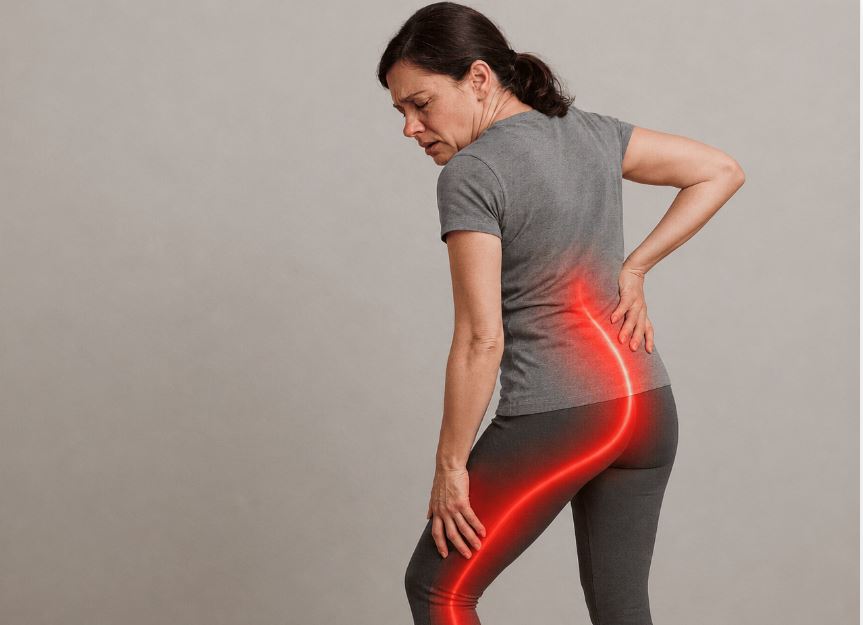
Sciatica Is a Symptom — Not the Root Problem
Sciatica describes pain that travels from the lower back through the buttock and down the leg — but the sciatic nerve isn't the source of the problem. It's the victim. The real cause is something compressing or irritating the nerve: a herniated disc, a restricted lumbar or sacral joint, foraminal narrowing, or a tight piriformis muscle entrapping the nerve in the buttock.
Most people try to manage the leg pain without addressing the structural cause. That's why it keeps coming back. Finding and correcting the mechanical source is what creates lasting relief.
The Problem
Joint restriction, disc pressure, or piriformis tightness compresses the sciatic nerve root — triggering pain, numbness, or burning that can radiate all the way to the foot. Left unaddressed, it often worsens with prolonged sitting, bending, and everyday activity.
The Solution
Dr. Ryan uses neurological testing, directional preference screening, and a focused movement assessment to identify exactly what's compressing the nerve — then applies targeted lumbar and pelvic adjustments to restore mechanics and relieve nerve irritation.
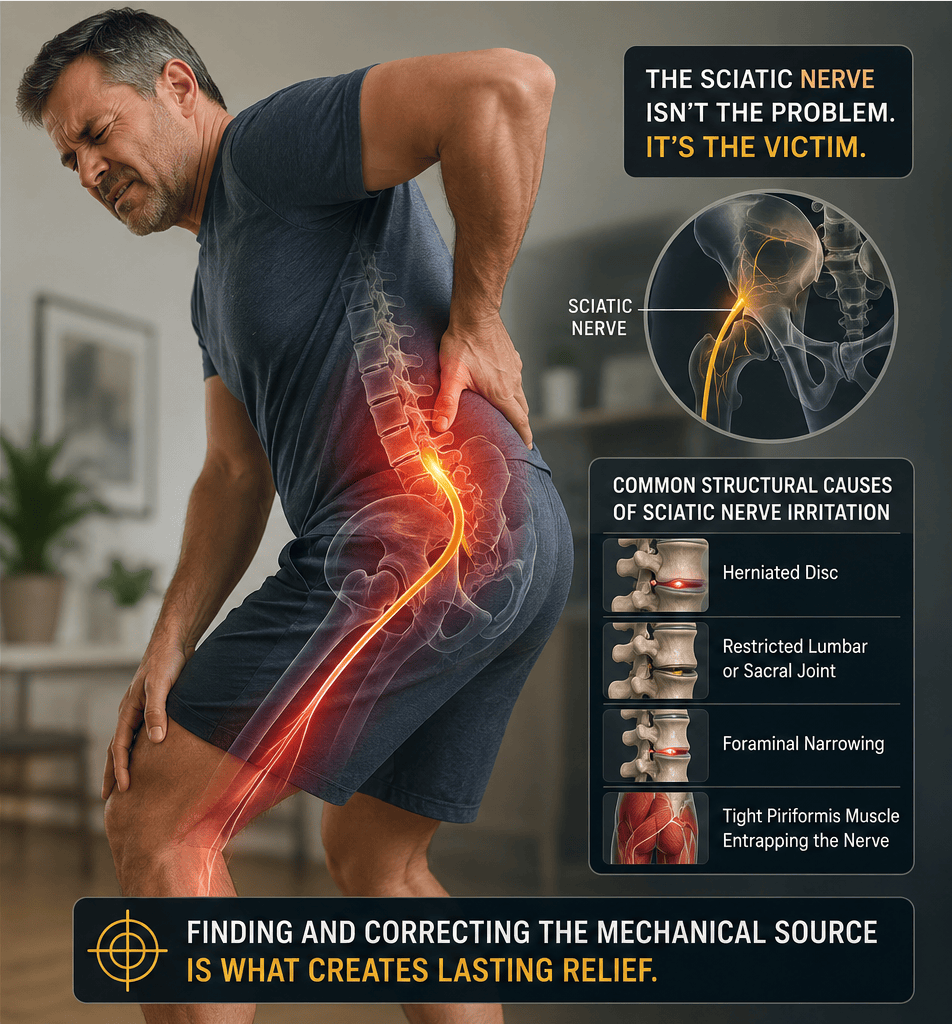
Sciatica Isn't Just a Bad Back — Here's the Nerve Mechanics
The sciatic nerve is the longest nerve in the body, formed from several lumbar and sacral nerve roots (L4–S3) that merge and travel through the pelvis, down through the buttock, and into the leg. When any of those nerve roots are compressed — by a disc, a restricted facet joint, or foraminal narrowing — the signal is felt as pain, burning, numbness, or weakness anywhere along that path.
Understanding where the compression originates determines the treatment. That's why a thorough evaluation — not just a guess — is the starting point for effective sciatica care.
- Disc bulges at L4–L5 or L5–S1 are among the most common causes of true nerve root compression
- Facet joint restriction reduces foraminal space, directly irritating the exiting nerve root
- Herniated discs are often secondary to long-standing joint restriction and poor loading mechanics
- Piriformis syndrome mimics sciatica — the piriformis muscle entraps the nerve in the deep buttock
- Core endurance deficits increase lumbar loading and are a major driver of recurring sciatic flares
Disc Compression
A bulging or herniated disc at L4–L5 or L5–S1 presses directly on the nerve root — the most common structural cause of true sciatica. Chiropractic care reduces the mechanical load on the disc and restores joint motion around it.
Joint & Foraminal Restriction
When lumbar or sacral facet joints lose their normal motion, the openings (foramina) where nerve roots exit the spine narrow — compressing the nerve directly. Targeted adjustments restore this space and relieve irritation.
Piriformis Entrapment
In some patients, a tight or inflamed piriformis muscle in the buttock presses on the sciatic nerve — producing symptoms identical to disc-based sciatica. Soft-tissue techniques and hip strengthening resolve this effectively.
A Clear, Step-by-Step Path to Leg Pain Relief
Sciatica responds best when the specific cause is identified and addressed — not just the symptom. Every new patient receives a structured evaluation and a transparent plan before care begins.
Neurological & Movement Assessment
Posture analysis, range of motion testing, neurological screening (reflexes, sensation, strength), directional preference evaluation, and a full history of your symptoms. Imaging is coordinated if red flags are present.
Diagnosis & Education
Dr. Ryan explains exactly what's compressing your sciatic nerve — disc, joint, or piriformis — and maps out the specific levels involved. You'll leave the first visit knowing your diagnosis and your plan.
Hands-On Treatment
Targeted lumbar and pelvic adjustments, soft-tissue work for piriformis and glutes, and nerve mobility exercises — built around your specific findings.
Home Plan & Prevention
You leave every visit with a clear home program — nerve mobility exercises, core progressions, sitting and lifting guidelines — that reinforces your progress and reduces the risk of recurrence.

Lumbar & Pelvic Adjustments That Free the Nerve
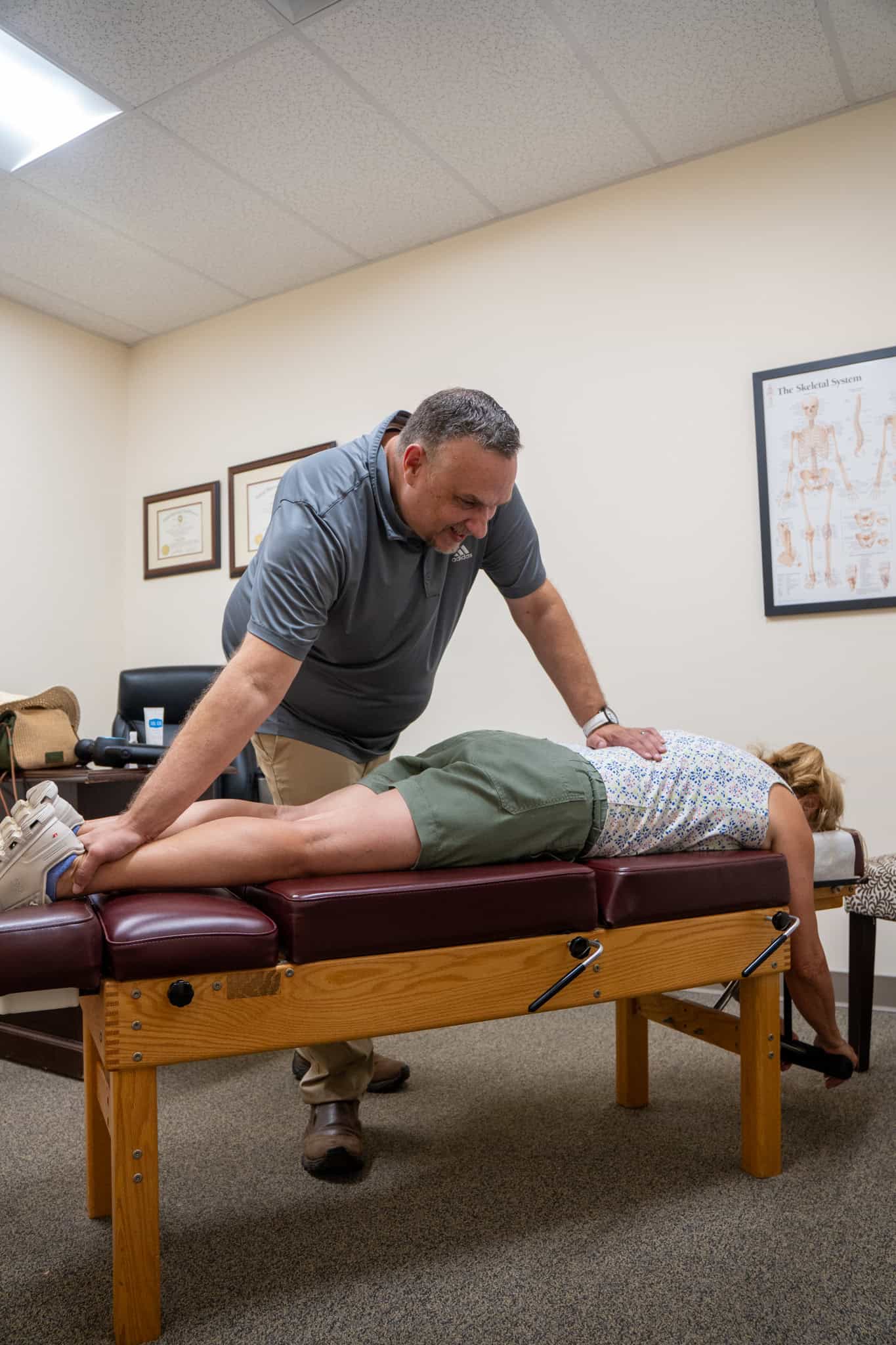
A targeted chiropractic adjustment to the lumbar spine and pelvis restores normal joint motion, widens the foraminal openings where nerve roots exit, and reduces the mechanical compression driving your sciatic symptoms.
Research supports spinal manipulation for lumbar radiculopathy and disc-related sciatica — and Dr. Ryan has been applying these techniques for over 20 years, including with competitive athletes who needed a fast, safe return to training.
HVLA Adjustment
Precise, targeted thrust to restore segmental motion and decompress the affected nerve root.
Gentle Mobilization
Lower-force option for acute or sensitive presentations — equally effective for many patients.
Pelvic & SI Joint Work
Sacroiliac and pelvic imbalances contribute to sciatic nerve tension and are addressed at every visit.
Piriformis Release
Soft-tissue techniques to release deep buttock tension and reduce nerve entrapment at the piriformis.
Three Pillars of Lasting Sciatica Relief
Adjustments alone relieve acute sciatic pain — but combining them with nerve rehab and lifestyle coaching is what prevents it from coming back. Here's how we build your complete plan.
Chiropractic Adjustments
Targeted lumbar and pelvic adjustments restore joint mobility, reduce nerve root compression, and relieve the muscle guarding that perpetuates sciatic symptoms.
Nerve Rehab & Core Strength
Neural flossing, McGill core progressions, glute bridges, and hip strengthening reduce nerve tension and build the stability that keeps sciatica from returning.
Ergonomics & Load Coaching
Sitting posture, car seat setup, bending and lifting mechanics — practical daily changes that reduce the nerve irritation your spine accumulates over time.
Who We Help
Sciatica affects patients of all ages and activity levels. Dr. Ryan treats a wide range of presentations at our Georgetown and Taunton offices.
Runners & Athletes
Repetitive loading, hip tightness, and training errors can trigger sciatica that sidelines you for weeks. We identify the cause and build a plan to get you back training — often faster than you expected.
Desk Workers & Commuters
Prolonged sitting increases disc pressure and compresses the piriformis. If your sciatic pain is worst after long drives or desk sessions, the cause is mechanical — and highly treatable.
Manual & Labor Workers
Repeated bending, lifting, and twisting under load creates the conditions for disc irritation and nerve compression. We restore mechanics and teach load management to keep you working safely.
Prenatal & Postpartum
Pelvic shifts during pregnancy frequently compress the sciatic nerve. Pregnancy-safe chiropractic care relieves sciatic pain without medication throughout all trimesters.
Seniors & Older Adults
Degenerative disc changes and foraminal narrowing are common causes of sciatica in older adults. Gentle mobilization, stability training, and nerve mobility work improve function and reduce pain safely.
Recurring or Chronic Sciatica
If your sciatica keeps flaring despite rest, injections, or medication, the underlying mechanical cause hasn't been corrected. That's exactly where chiropractic care starts — and where most patients finally find lasting relief.
Sciatica Chiropractic Care FAQ
Still have questions? Call us at (978) 352-4200 or visit our new patient page.
Ready to Relieve Your Sciatica?
We'll design a personalized plan — leg pain relief first, then core strength and nerve rehab for long-term results. Serving Georgetown, Taunton, and surrounding Massachusetts communities since 2005.