

August 2026 • Week 3 — Supplements, Explained
What Actually Makes a Good Multivitamin?
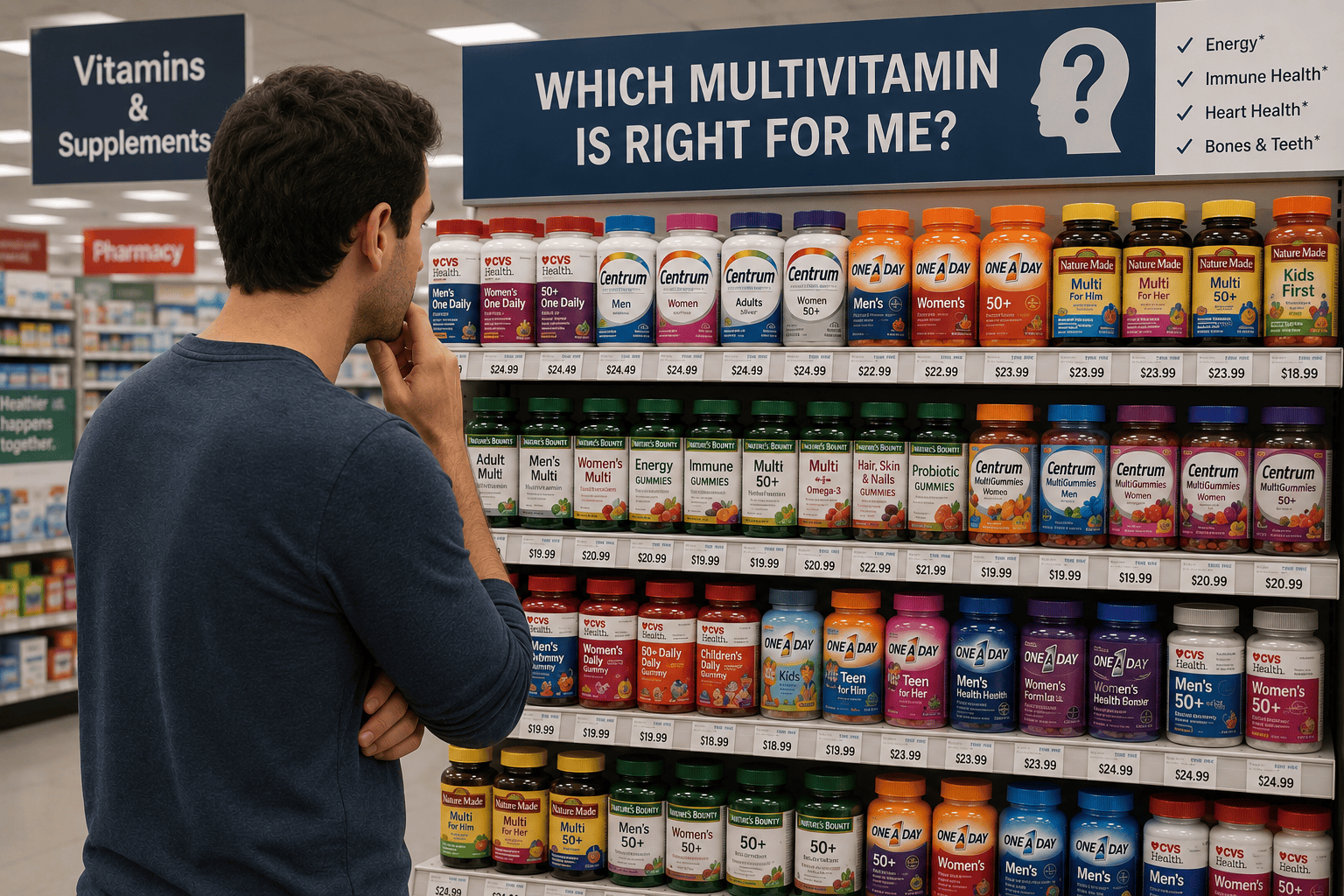
A multivitamin is the one supplement almost everyone has tried. It is also the one where the gap between marketing and quality is widest. Two bottles can list nearly the same nutrients and be completely different products once they are inside your body.
The label is designed to impress you. Here is how to look past it.
What to Look For
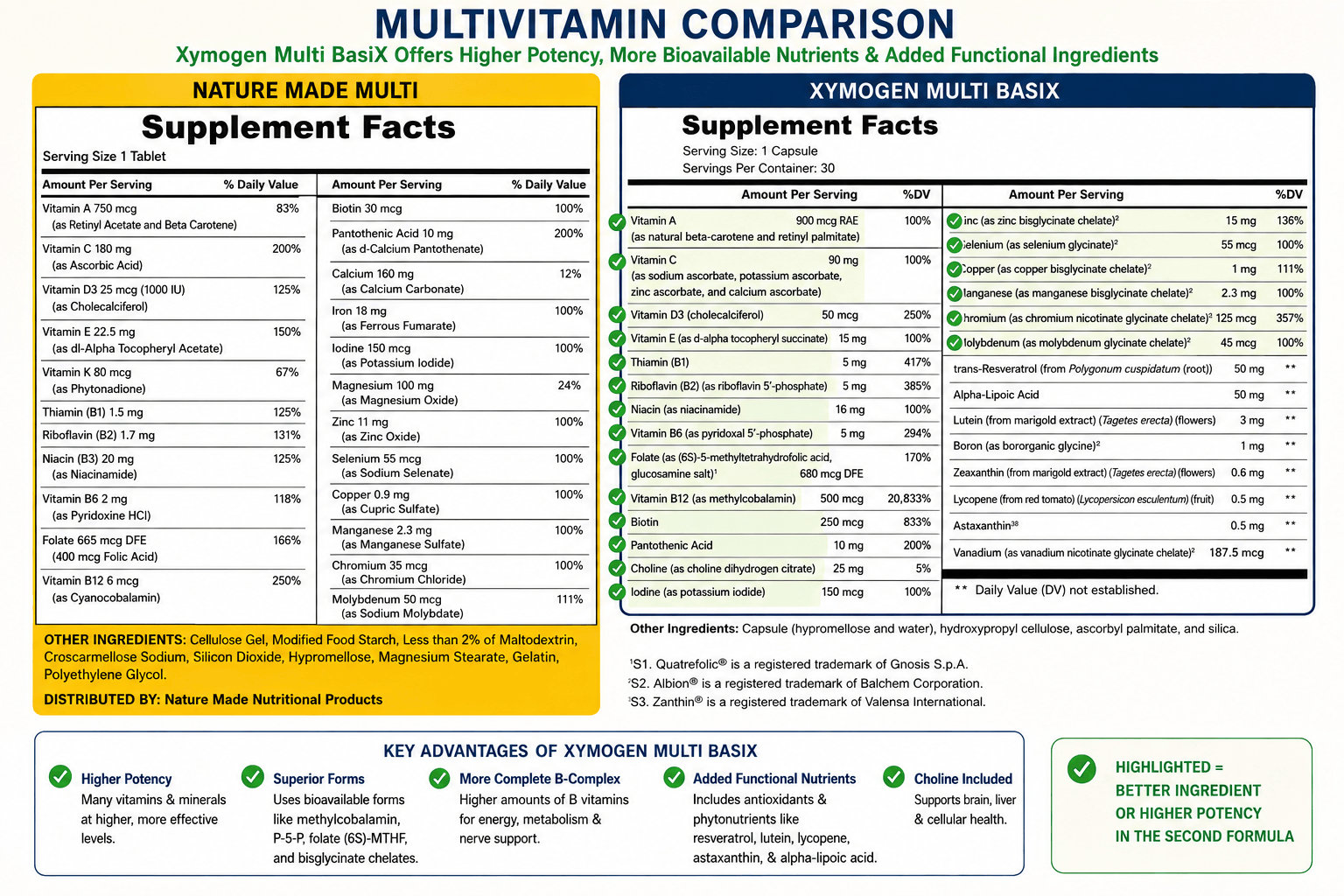
- Active, absorbable forms. This is the big one. Look for folate as methylfolate rather than folic acid, B12 as methylcobalamin rather than cyanocobalamin, and minerals in chelated forms (like glycinate) rather than cheap oxides. Same nutrient on the label, very different absorption — the same lesson from our magnesium issue.
- Third-party testing. A seal like NSF or USP means an outside lab verified that what is on the label is actually in the bottle, at the stated amounts, without contaminants.
- Sensible doses. A good multi covers your foundation. It does not need 5,000% of everything — past a point, you simply excrete the excess.
- A clean base. Free of the common allergens and unnecessary fillers, dyes, and added sugar.
What to Ignore
- Giant "high potency" numbers. Mega-doses look powerful on the label but mostly end up in your urine. Bigger is not better.
- Proprietary blends. If the label hides individual amounts inside a "blend," you cannot know how much of anything you are actually getting.
- Long ingredient lists with trace amounts. Dozens of trendy extras sprinkled in at doses too small to matter — there to read well, not to work.
- Sugary gummies. Easy to take, but they often drop the minerals and lean on sugar to taste good.
- Price as proof. Expensive does not equal quality, and neither does cheap. The tell is in the forms and the testing, not the sticker.
Quality vs. Expensive
This is the part worth repeating. A high price tag is not evidence of a good product, and a bargain bottle is not automatically bad. What actually separates a quality multivitamin from an expensive one is the same short list every time: absorbable nutrient forms, sensible doses, third-party testing, and a clean base. Once you know what to read, you can judge any bottle in about thirty seconds.
One I Recommend: Xymogen Multi BasiX
A multivitamin I am comfortable pointing patients to is Multi BasiX by Xymogen, available in our supplement store. It checks the boxes above rather than the marketing ones:
- Over 20 essential nutrients in bioavailable, active forms
- NSF Certified, with a certificate of analysis available
- Free of the common allergens — dairy, egg, fish, gluten, soy, wheat, and more
- Includes antioxidants like resveratrol, alpha-lipoic acid, and carotenoids
- One capsule a day — a simple, no-fuss foundation
It is a foundation, not a mega-dose — which is exactly what a daily multivitamin should be. If you have a specific goal beyond the basics, that is where a targeted supplement or a conversation with me comes in.
You can find Multi BasiX and the rest of our professional-grade options in our online supplement store. For a limited time, sign up before the end of August and get an extra 5% off your first order. Not sure what fits your situation? Bring it to your next visit — I am glad to help you build a simple routine that makes sense. Call us or book online below.
This is general education, not medical advice. Talk with your healthcare provider before starting or changing any supplement, especially if you take medication or manage a health condition.
Next Week
Week 4 is all about fish oil. Does it actually do what people think? What EPA and DHA really matter for, how to spot a quality one from a cheap one that has gone rancid, and who benefits most from it.
Ryan Chiropractic Wellness
Improving Function. Restoring Balance. Supporting Long-Term Health.
📍 Georgetown & Taunton, Massachusetts
📞 (978) 352-4200