

April 2026 • Week 4
How It All Adds Up

This is the final week of a four-week series on how the body accumulates stress, tension, and dysfunction, and what it takes to stay ahead of it.
- How sitting, stress, and the nervous system compound each other
- Why symptoms are usually the last thing to appear
- The difference between consistent care and crisis care
- What a long-term approach looks like in practice
How the Patterns Compound
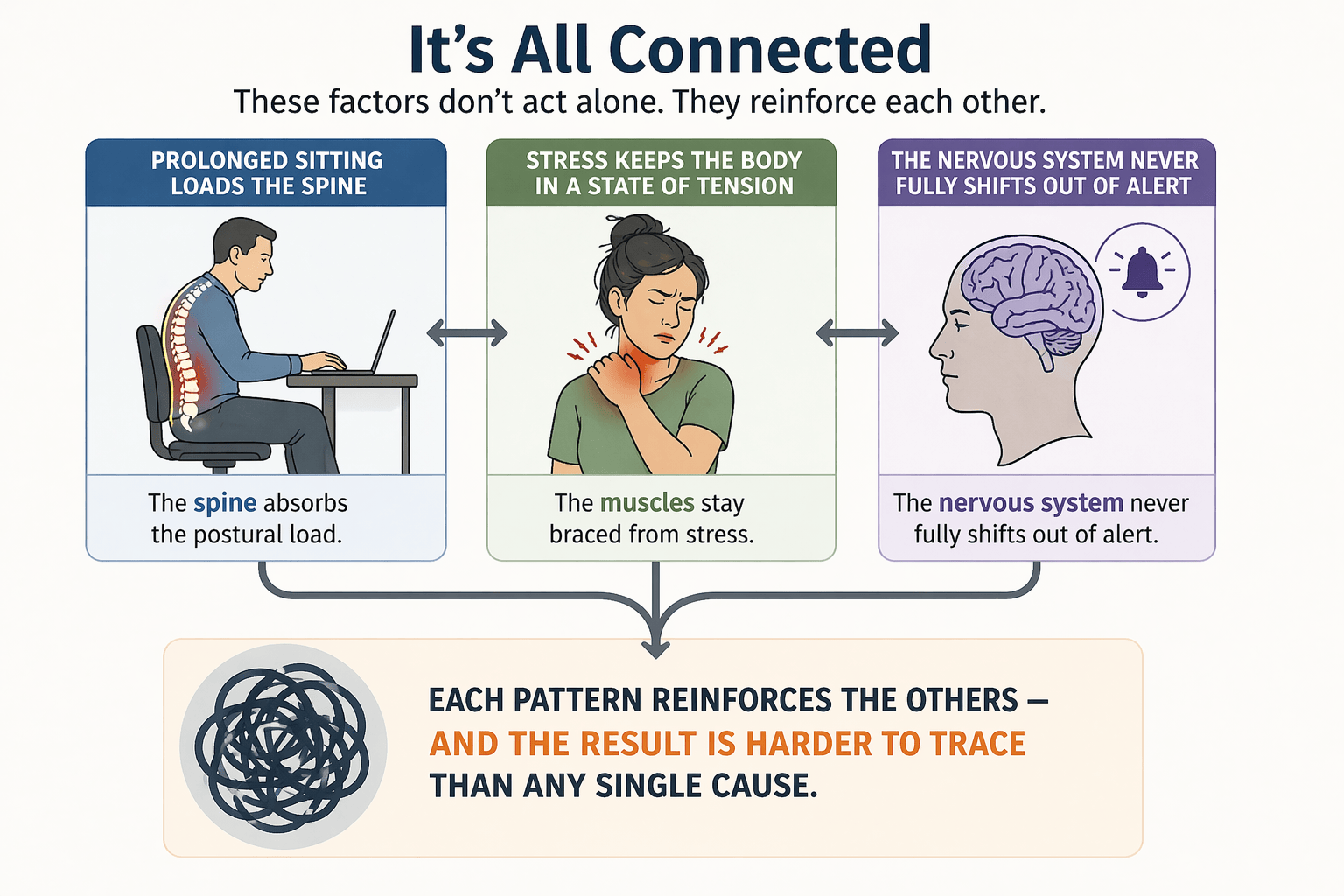
Over the past three weeks, we covered how prolonged sitting loads the spine and how stress keeps the body in a state of physical tension. None of these operate in isolation. The spine absorbs the postural load. The muscles stay braced from stress. The nervous system never fully shifts out of alert. Each pattern reinforces the others, and the result is harder to trace than any single cause.
Why Symptoms Show Up Late
The body compensates before it breaks down. When one area is overloaded, another picks up the slack. That process is protective, but it also masks what is building underneath. By the time a symptom appears, the pattern behind it has usually been accumulating for weeks or months.
Pain is not the start of the problem. It is the point where the body can no longer compensate quietly.
Consistent Care vs. Crisis Care
Most people come in when something hurts and stop when it feels better. That works for acute injuries. It does not work as well for patterns that build gradually. Waiting for significant symptoms means the body has already been compensating for a long time, and unwinding that takes longer than preventing it.
- Consistent care addresses restrictions before they compound
- Regular visits catch compensatory patterns before they become symptoms
- Recovery from activity and stress happens more efficiently with a spine that moves well
Routine care is about staying ahead of accumulation, not managing a breakdown after the fact.
What a Long-Term Approach Looks Like
Long-term health is built through patterns that repeat, not single efforts. Small things done consistently outperform large efforts done occasionally. A practical foundation includes:
- Regular spinal care to maintain function before restrictions compound
- Movement breaks throughout the day to offset prolonged sitting
- Deep breathing to reset the diaphragm and support nervous system regulation
- Sleep that gives the body time to recover from daily accumulated demand
If this series raised questions about what might be building in your own body, a conversation is a good place to start. We are here when you are ready.
This Month's Series
Missed a week? Catch up here:
- Week 1, Screens, Posture, and the Modern Spine
- Week 2, Sitting Is the New Smoking
- Week 3, Stress Is Not Just in Your Head
Coming in May
Spring Into Summer Without Pain
May kicks off a five-week series on one of the most common times of year for injuries and flare-ups, the stretch between spring and summer when life suddenly gets a lot more physical.
- Week 1: Yard work, gardening, and why spring cleanup causes so many back and shoulder problems
Five weeks of practical information to help you move through the season without paying for it later.
Ryan Chiropractic Wellness
Improving Function. Restoring Balance. Supporting Long-Term Health.
📍 Georgetown & Taunton, Massachusetts
📞 (978) 352-4200