

April 2026 • Week 2
Sitting Is the New Smoking
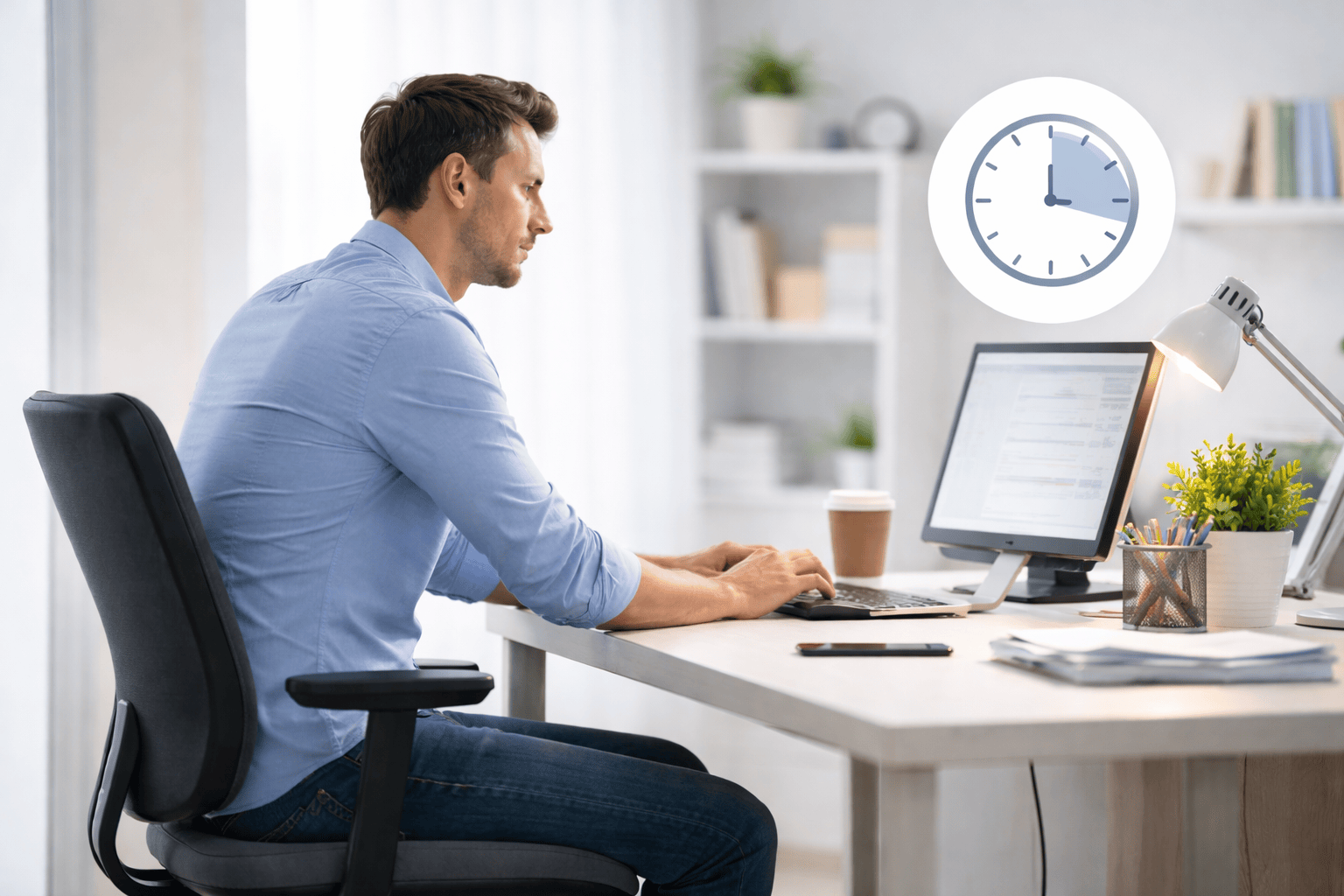
Most people assume that a good workout cancels out a full day in a chair. That is one of the most common misunderstandings about how the body actually works.
Sitting itself is not the enemy. The issue is duration and repetition. When the body spends the majority of its waking hours in one fixed position, it begins to adapt, and not always in helpful ways.
What Happens When We Sit Too Much
The body is built for movement, not just the burst kind you get at the gym, but the low-level, constant kind that happens when you walk, stand, shift, and stretch throughout the day. When that movement disappears, things begin to change gradually and quietly.
- Hip flexors begin to shorten and tighten
- Glute muscles become less active
- Spinal discs lose some of the movement-driven nourishment they rely on
- Blood flow slows in the lower body
- The lower back absorbs more compensatory stress
Why Exercise Alone May Not Be Enough
The body responds most to its dominant pattern, what it does most of the time. One hour of movement cannot fully override eight or nine hours of stillness. The body is always adapting, and it adapts to whatever pattern it experiences most.
That is why some people who exercise consistently still experience hip tightness, lower back stiffness, or reduced mobility. It is not always from lack of effort. Often, it is from how the rest of the day is spent.
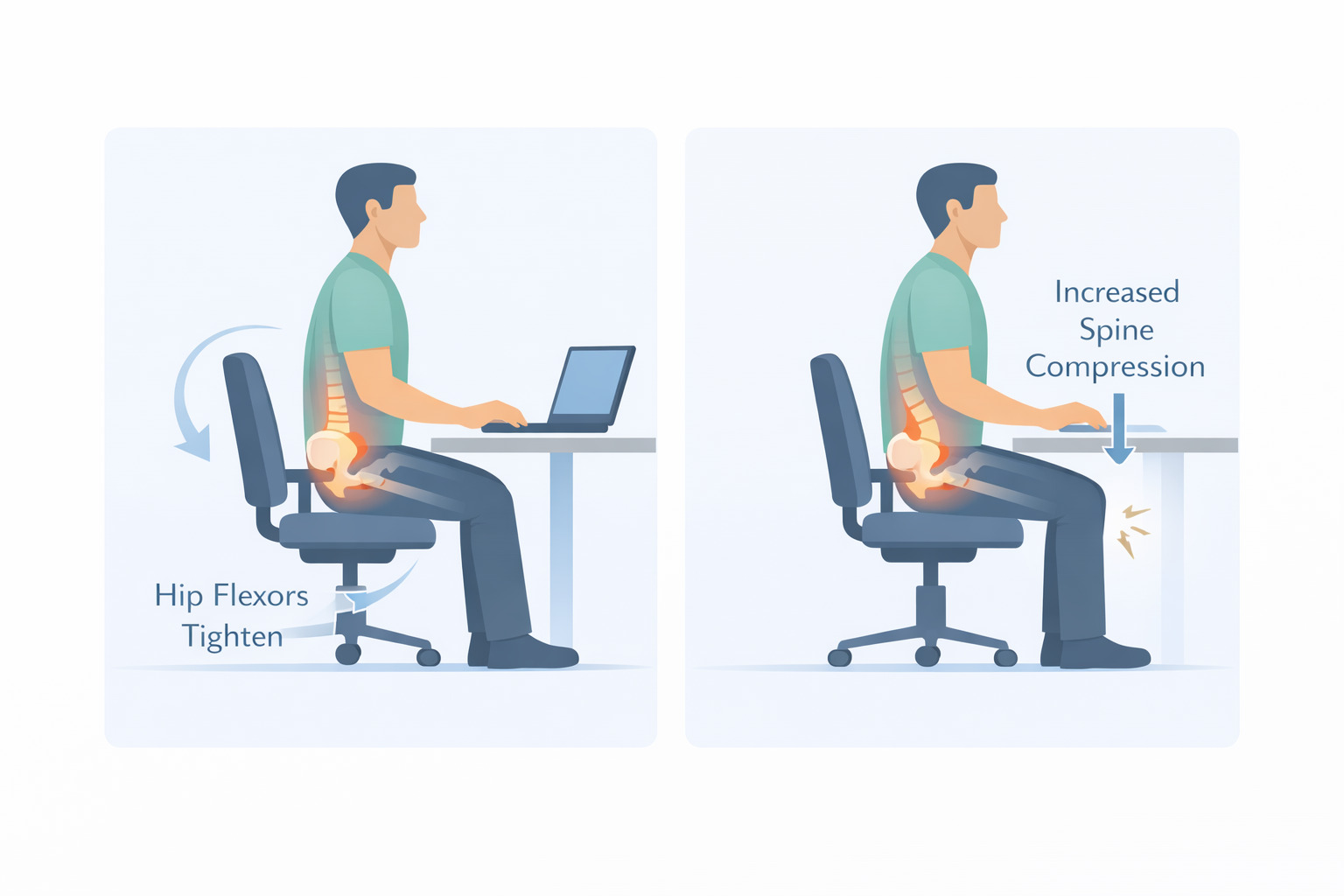
How Sitting Affects the Lower Back and Hips
When the hips remain flexed for long periods, the surrounding muscles adapt to that shortened position. Hip flexors tighten. Glutes become less active. The pelvis can begin to shift. Over time, the lower back may be left to absorb forces it was not designed to handle alone.
This pattern may contribute to:
- Persistent stiffness or aching in the lower back
- Tightness across the front of the hips
- Reduced mobility when standing or walking
- Greater strain during lifting, bending, or activity
Circulation and Disc Health
Spinal discs do not have a direct blood supply the way muscles do. They rely on the natural pumping action of movement to draw in fluid and nutrients. Prolonged sitting reduces that exchange. Over time, that can influence how well the spine moves and adapts.
Small Daily Changes That Help
You do not need to overhaul your entire day. Small, consistent changes in how often you move can make a meaningful difference over time.
- Stand up and walk for 2 to 3 minutes every 30 to 60 minutes
- Alternate between seated and standing positions when possible
- Add short hip flexor or glute stretches during the day
- Take phone calls while standing or walking
- Simply notice how long you have been still

If you have been noticing lower back stiffness, hip tightness, or reduced mobility, prolonged sitting may be playing a bigger role than you realize. Small daily movement changes can help reduce stress before those patterns become harder to unwind.
Next Week
Week 3 looks at how stress affects the body physically, from muscle tension and breathing changes to how the nervous system responds when it stays on alert for too long.
Ryan Chiropractic Wellness
Improving Function. Restoring Balance. Supporting Long-Term Health.
📍 Georgetown & Taunton, Massachusetts
📞 (978) 352-4200