

March 2026 • Week 3
Why Pain Often Returns
At Ryan Chiropractic Wellness, you will often hear our guiding principle: Move Better. Feel Better.
This phrase reflects an important clinical reality. How your body moves has a direct influence on how it feels.
Over the past two weeks, we have discussed two key ideas.
1) Pain is a warning signal, not necessarily the root problem.
2) The place you feel pain is not always where the true source of stress exists.
This week, we will look at another major factor in recurring discomfort: movement and stability.
The Body Is Designed to Move
Your joints, muscles, and nervous system are designed for coordinated movement. When movement becomes restricted or unbalanced, certain tissues begin to absorb more stress than they were meant to handle.
Over time, this can lead to irritation, inflammation, and eventually pain.
Many people experience relief when symptoms calm down, but if movement patterns remain unchanged, the same stress often builds again.
Mobility vs Stability
Some parts of the body are meant to move freely. Others are meant to provide support and control.
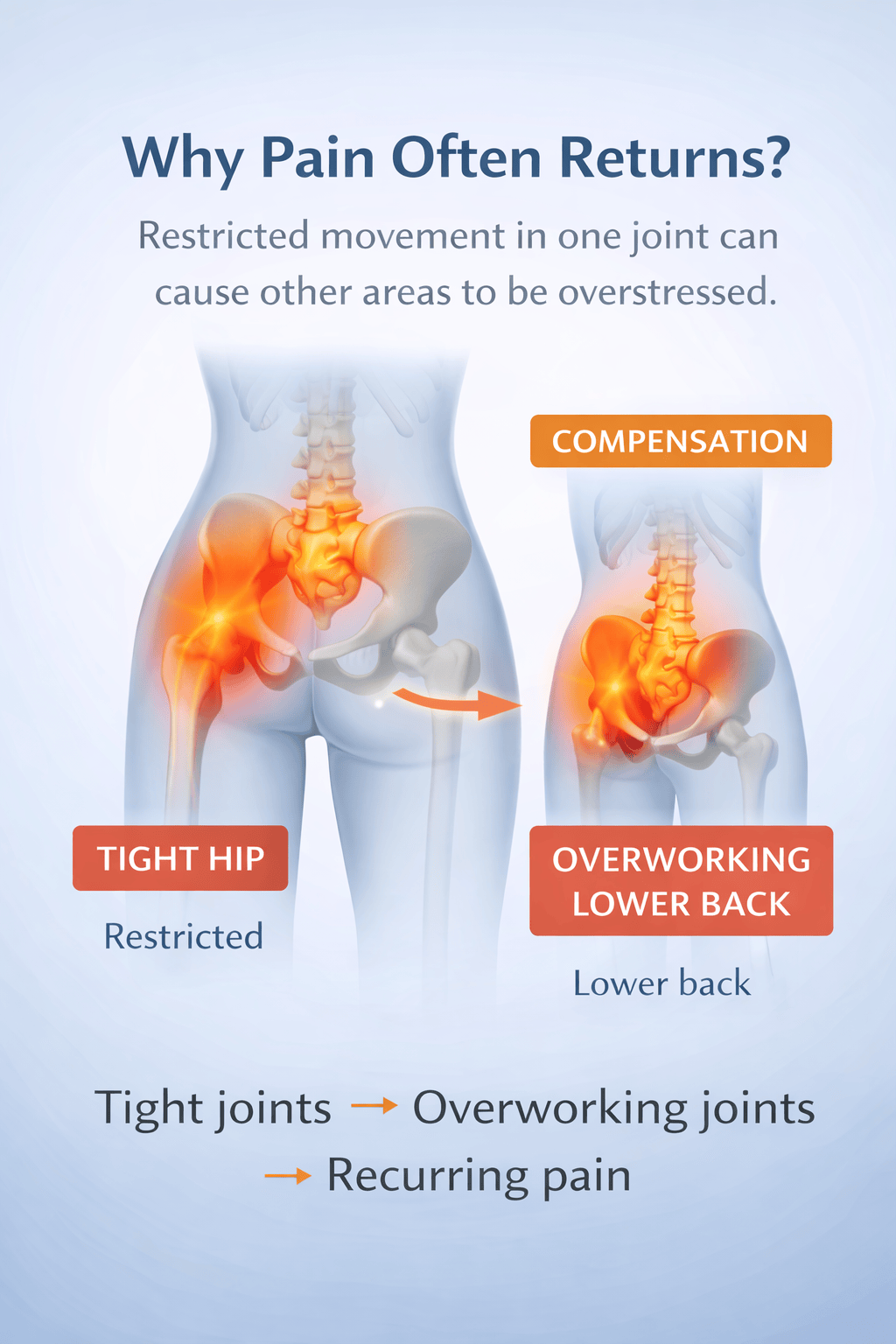
When mobile areas become stiff, nearby joints may begin to move too much. This imbalance can create a cycle of compensation that increases strain on muscles and ligaments.
For example:
- Restricted hip movement may increase stress on the lower back
- Poor core stability can contribute to recurring spinal discomfort
- Limited shoulder mobility may lead to neck tension and headaches
The issue is not always one specific structure. It is often how the entire system is working together.
Why Temporary Relief Is Not Enough
Rest, medication, and short-term therapies can reduce symptoms. These approaches can be helpful in calming irritation.
However, if movement patterns and stability are not addressed, the underlying stress may remain. This is one reason pain can return after periods of improvement.
Lasting change typically requires restoring how the body moves and supports itself.
A Function-Based Approach
At Ryan Chiropractic Wellness , we focus on helping patients improve both mobility and stability.
- Improving joint motion where restriction exists
- Supporting proper alignment and mechanics
- Strengthening stabilizing muscle groups
- Guiding movement patterns that reduce stress
- Promoting nervous system balance
When movement and stability improve together, the body is better able to handle daily demands without recurring flare-ups.
The goal is not simply short-term relief.
The goal is long-term resilience.
Where Do You Start?
Our care plans are designed to help patients progress from symptom relief toward improved function and long-term stability.
Pain may improve quickly.
True change happens as the body relearns how to move efficiently.
This Week’s Takeaway
If discomfort keeps returning, the focus may need to shift from simply reducing symptoms to improving how the body moves and stabilizes.
In Week 4, we will discuss why consistency plays such an important role in long-term health and prevention.