


November 2026 • Week 2 — Diabetes Awareness
Food First: Small Plate Changes, Steadier Blood Sugar
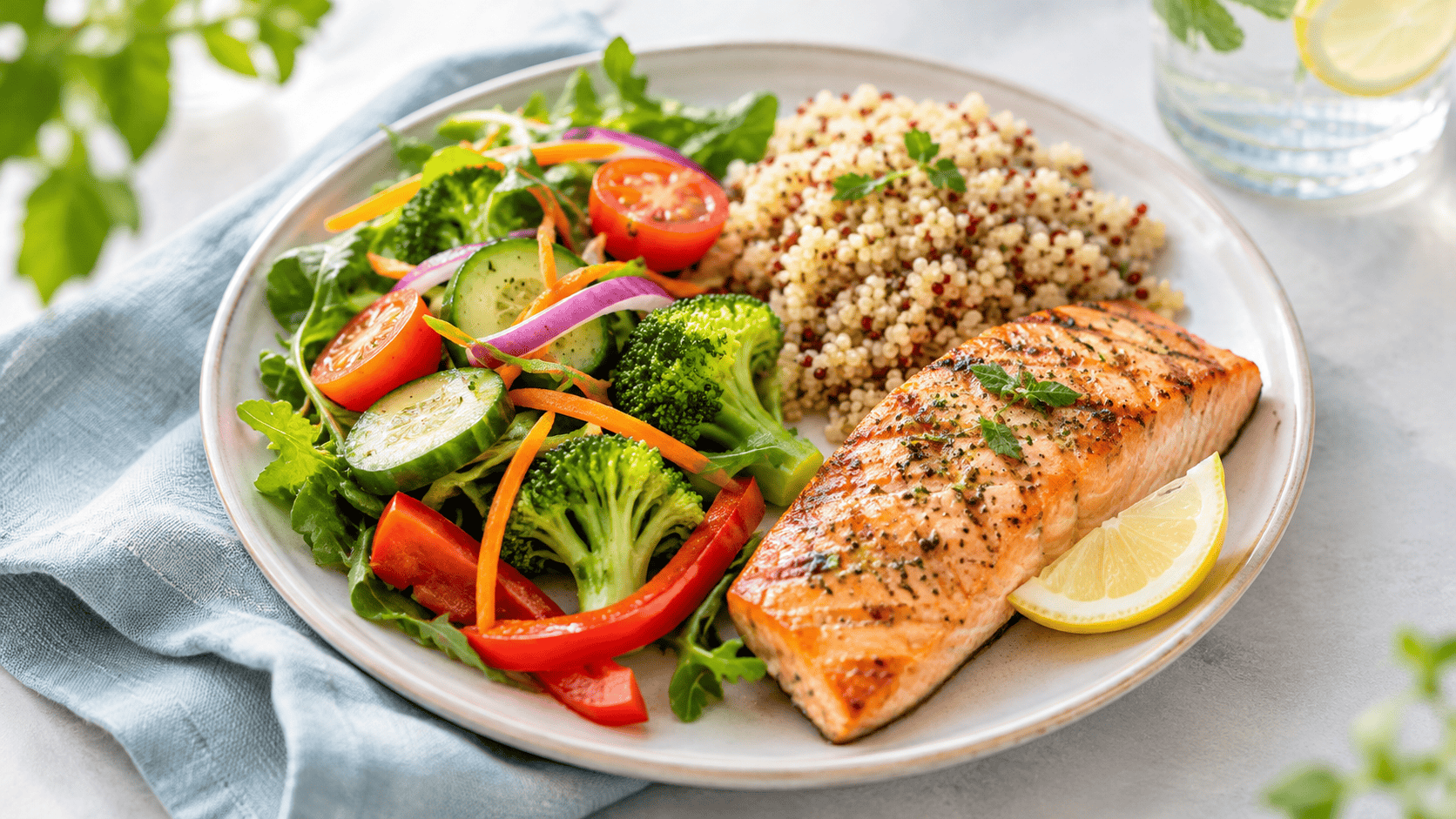
Last week we talked about knowing your numbers. This week we get practical with the thing that moves them most day to day: food. And the encouraging news from the research is that you do not need a dramatic overhaul.
In the landmark Diabetes Prevention Program, people at high risk who lost just 5 to 7% of their body weight through modest diet changes and regular activity cut their risk of developing Type 2 diabetes by about 58%. Small and sustainable beat drastic and short-lived, every time.
Small Plate Changes That Add Up
None of these require a special diet. They are simple tweaks to meals you are already eating:
- Put fiber and protein first. Starting a meal with vegetables and protein before the starch helps blunt the blood-sugar spike that follows.
- Add fiber to every meal. Vegetables, beans, and whole grains slow how quickly sugar enters the bloodstream.
- Pair carbs with protein or healthy fat. An apple with peanut butter lands very differently than an apple alone.
- Upgrade the carb, don't always cut it. Whole grains, legumes, and fruit over refined white versions.
- Take a 10-minute walk after meals. One of the simplest, best-studied ways to flatten a post-meal blood-sugar rise.

Supplement of the Week: Inositol
This week's supplement is one I have written about before: inositol. It is a naturally occurring compound found in foods like fruits, beans, grains, and nuts, and it plays a role in how your cells respond to insulin. That makes it genuinely interesting for blood sugar and insulin resistance.
The two forms that matter most for metabolic health are myo-inositol and D-chiro-inositol, which appear to work best together in roughly a 40:1 ratio. It has been studied for improving insulin sensitivity, and it is especially well known for supporting women with PCOS — where insulin resistance often plays a central role. I go into the full detail, including a commonly used dose, in my blog post: Inositol and Insulin Resistance.
As with everything this month: inositol can affect blood sugar, so it is not something to start on your own. If you are pregnant, managing PCOS, take any medication, or have a health condition, talk with your doctor before adding it.
Start Simple, Stay Consistent
That is the whole theme, really. You do not have to change everything this week. Pick one change from the list above, make it your default, and let it become a habit before you add the next. Small daily choices, repeated, are what move the numbers over time — on your plate and in your life.
If you would like help building a simple, realistic plan around food, movement, and the right supplements for your situation, that is exactly the kind of thing we talk through at a visit. Quality inositol and the other supplements in this series are available in our online supplement store. Call us or book online below.
This is general education, not medical advice, and it is not a substitute for care from your physician. Do not start or stop any supplement or medication without talking to your doctor, especially if you have diabetes, take blood-sugar medication, or are pregnant. Source: CDC; Diabetes Prevention Program.
Next Week
Week 3 moves off the plate and into daily habits: how movement, sleep, and stress each pull on your blood sugar — and the small, doable changes that help the most.
Ryan Chiropractic Wellness
Improving Function. Restoring Balance. Supporting Long-Term Health.
📍 Georgetown & Taunton, Massachusetts
📞 (978) 352-4200