

June 2026 • Week 2 — Active & Aligned: A Family Summer Wellness Series
Tech Neck Is Real — And It's Hitting Your Kids
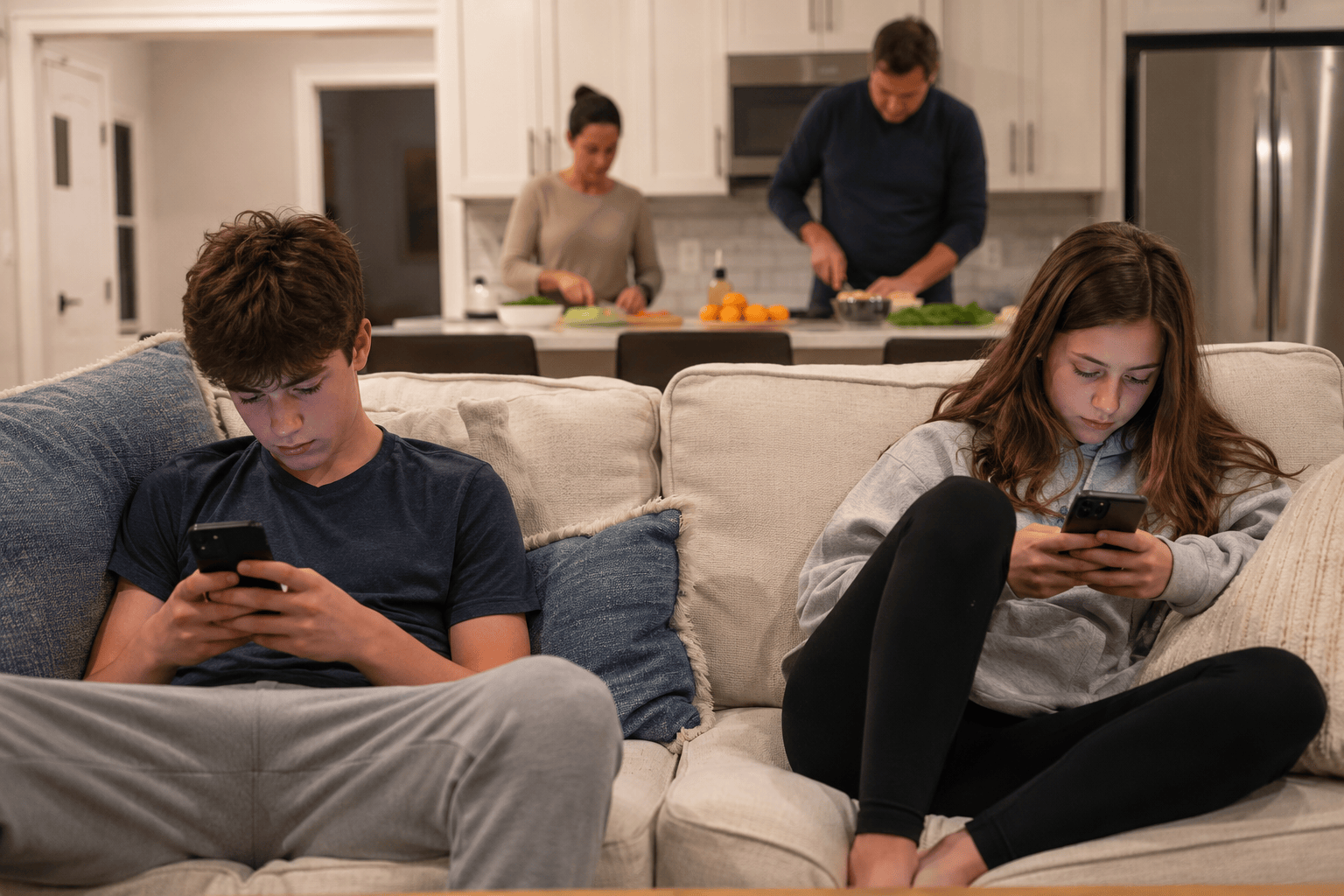
Look around any room with kids in it and you will see the same posture: head tipped forward, chin down, shoulders rounded over a screen. It is so normal now that it barely registers. But the body registers it.
"Tech neck" is the term for the forward-head posture that develops from looking down at phones, tablets, and laptops for long stretches. It is showing up in younger kids than ever — and summer, with its longer unstructured screen hours, is when it tends to get worse.
What's Actually Happening to the Neck
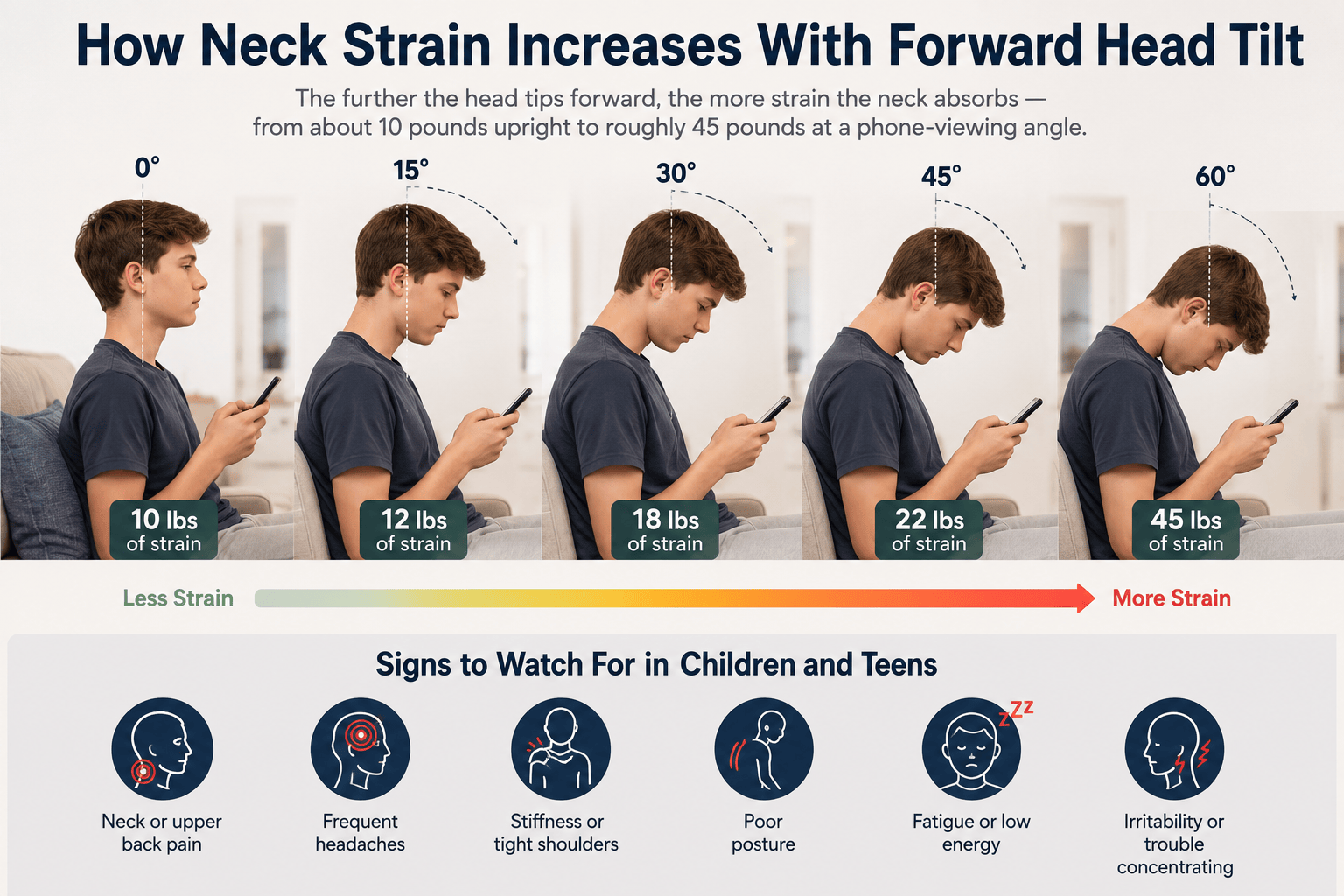
The human head weighs roughly 10 to 12 pounds when balanced directly over the shoulders. The moment it tips forward, the muscles of the neck and upper back have to work harder to hold it up. The further forward it goes, the greater the load.
At a 45-degree angle — a typical phone-looking position — the effective strain on the neck climbs to the equivalent of around 45 to 50 pounds. That is the load growing muscles and joints are being asked to manage, often for several hours a day, during the years the spine is still developing.
Signs to Watch For in Children and Teens
Kids rarely complain about posture directly. They are more likely to mention something that seems unrelated, or nothing at all. A few things worth noticing:
- A visibly forward head position or rounded shoulders, even when not on a device
- Complaints of neck stiffness, upper back tightness, or headaches — especially later in the day
- Frequent rubbing of the neck or shoulders
- Tiring quickly during activities that require an upright posture
- A noticeable hunch when standing or walking that was not there a year ago
Simple Stretches Families Can Do Together
The goal is not to eliminate screens. It is to counteract the posture they encourage. A few minutes a day makes a difference, and doing it as a family makes it more likely to actually happen.
- Chin tucks. Gently draw the chin straight back, as if making a double chin, hold for five seconds, release. Ten reps. This directly counters the forward-head position.
- Doorway chest stretch. Forearms on a doorframe, step through gently to open the chest. Holds the shoulders back where rounding pulls them forward.
- Upper back extensions. Hands behind the head, gently arch the upper back over the back of a chair. Reverses hours of forward rounding.
- Shoulder rolls. Ten slow rolls backward, a few times a day. Simple enough that younger kids will do it without resistance.
Screen-Time Habits That Help
- Bring the screen up, not the head down. Teach kids to raise the phone or tablet closer to eye level rather than dropping the head to meet it.
- Use the 20-minute reset. Every 20 minutes of screen time, look up and move for a moment. A timer or app reminder makes it automatic.
- Set up devices at a table, not a lap. Lap use forces the worst angle. A table brings the screen higher and the posture better.
- Build in screen-free movement blocks — outdoor time, a walk, anything that gets the head up and the body moving.

How Chiropractic Care Addresses It
Stretches and better habits help, but if forward-head posture has already become a child's default, the joints and muscles have adapted to hold it there. Chiropractic care focuses on restoring proper movement to the spine and helping the body relearn a more balanced position.
Catching this early matters. Posture patterns set during the developing years are easier to address now than after a decade of reinforcement. A check-up gives you a clear picture of where your child stands — and what, if anything, is worth addressing before it becomes a long-term pattern.
If you have noticed your child's posture slipping — or they have been mentioning headaches or neck tightness — it is worth a look. Bring them in for a posture assessment and we will show you exactly what we see. Call us or book online below.
Next Week
Week 3 is for the sports families. With summer leagues and camps in full swing, we will cover common youth sports injuries, how spinal alignment affects performance, and how to keep your young athlete in the game all season.
Ryan Chiropractic Wellness
Improving Function. Restoring Balance. Supporting Long-Term Health.
📍 Georgetown & Taunton, Massachusetts
📞 (978) 352-4200