

January 2026 • Week 1
Posture, Screens & Growing Bodies
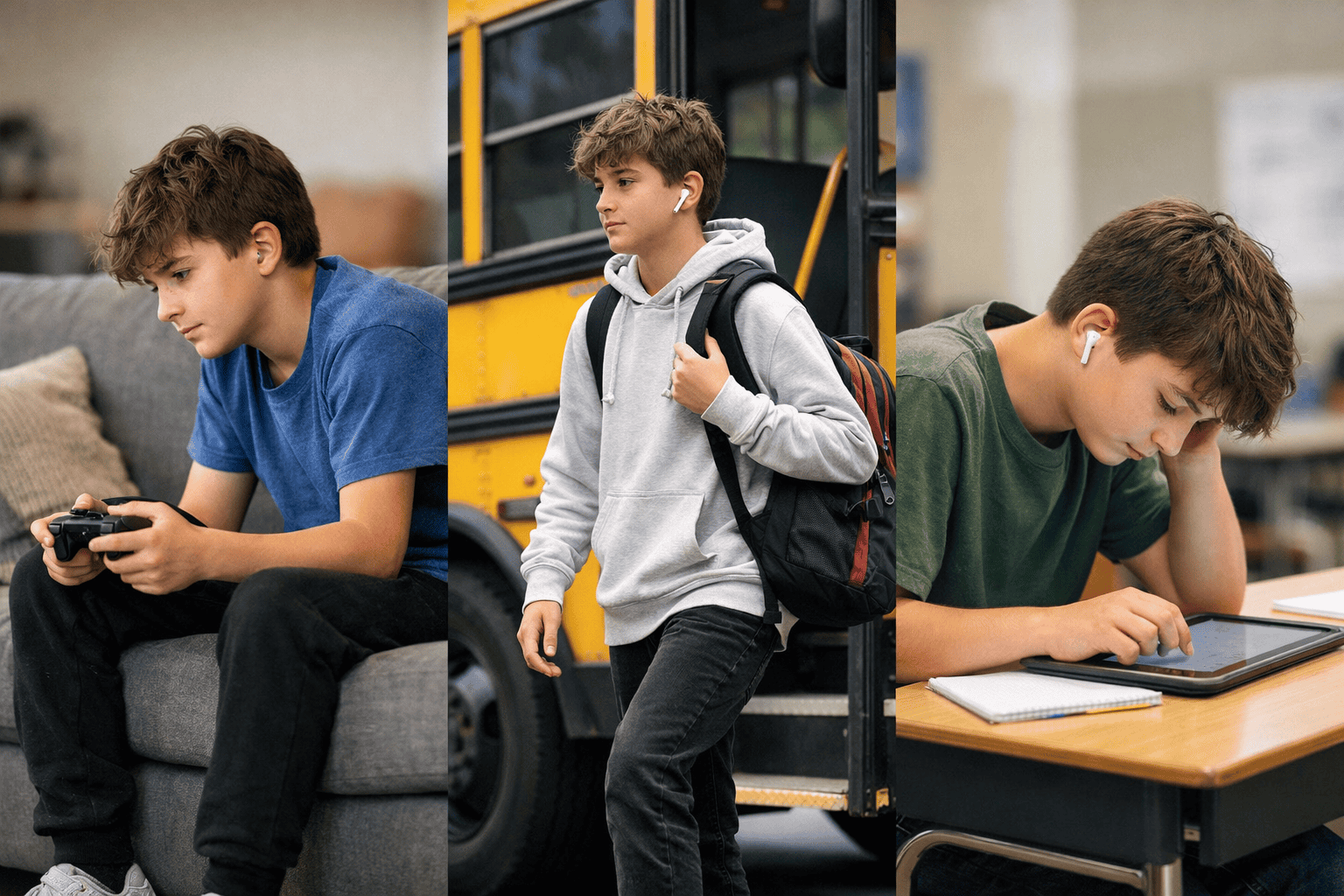
Most parents don’t think about posture until something hurts. But what we’re seeing more often in school-age kids today isn’t injury — it’s overload.
Modern kids aren’t fragile. They’re adapting.
They’re growing up in an environment that asks their bodies to handle more sitting, more screens, and more daily physical load than ever before.
The quiet posture shift happening in kids
Children are incredibly adaptable. That’s a strength — but it can also mask developing stress patterns. Instead of breaking down immediately, their bodies adjust to daily inputs like:
- Increased screen use at home and school
- Long hours of sitting during learning and leisure
- Heavy backpacks, often worn on one shoulder
These posture changes usually happen gradually and without pain at first.
Why parents often notice after symptoms appear
Most families don’t become concerned about posture until something changes, such as:
- Neck, back, or leg complaints
- Ongoing “growing pains”
- Decreased endurance or quicker fatigue
- Changes in coordination, balance, or sports performance
By the time discomfort shows up, the body has often been compensating for quite a while. That doesn’t mean something is “wrong” — it means the body has been working hard to adapt.
Posture is about function — not appearance
When we talk about posture in children, we’re not talking about forcing them to sit up straight or correcting how they look. We’re looking at how their body is handling daily load, growth, and movement demands.
Posture reflects function — not appearance.
This month, start paying attention to how your child sits, stands, and moves.
We’ll show you what actually matters — and what doesn’t.
Schedule a Child Posture & Movement Evaluation
Forward to Family or Friend