

October 2026 • Week 5 — Women's Health: Take Care of Her, Too
Breast Cancer: Awareness, Progress, and Hope
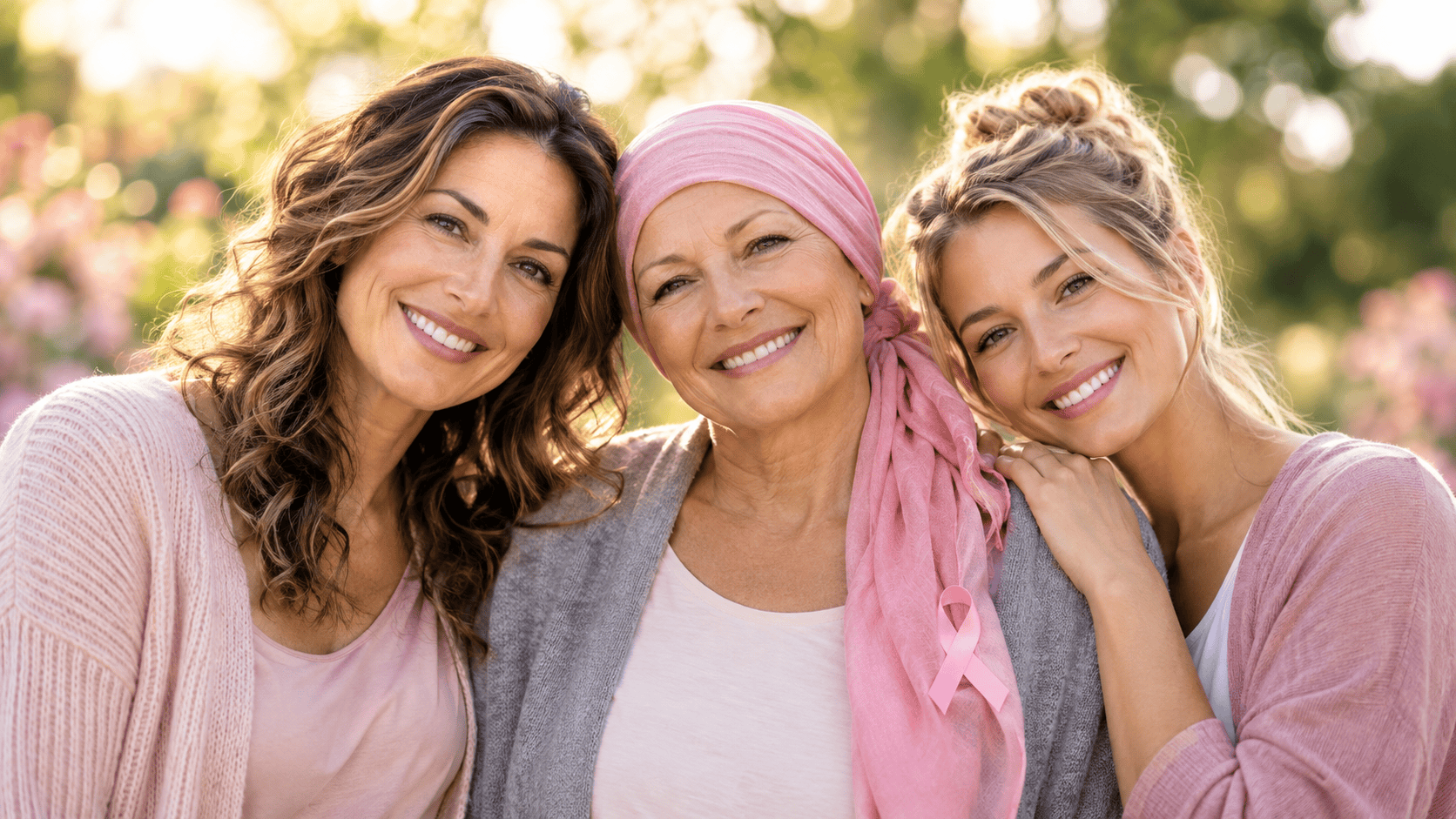
We cannot close out Women's Health Month without talking about breast cancer. October is Breast Cancer Awareness Month, and the reason it gets a whole month is simple: it touches nearly every family. If you cannot think of someone in your own life who has faced it, you are among the lucky few.
The Numbers
- About 1 in 8 women in the U.S. will develop breast cancer in her lifetime (American Cancer Society).
- In 2026, an estimated 321,910 women will be diagnosed with invasive breast cancer.
- There are more than 4 million breast cancer survivors living in the U.S. today.
Those survivors are the number to hold onto. Breast cancer is common, but it is also one of the great success stories of modern medicine — and more women are living long, full lives after it than ever before.
A Connection Worth Understanding: Back Pain
As a chiropractor, back pain is my world, so let me be careful and clear here. The vast majority of back pain has nothing to do with cancer. It comes from muscles, joints, discs, and posture — the everyday things we talk about all the time. Please do not read this and worry about your back.
But there is an honest connection worth knowing. When breast cancer spreads, bone is the most common place it goes, and the spine is one of the most frequently affected sites. In some cases, back pain is actually one of the first noticeable signs. That is exactly why a thorough practitioner does not just treat pain blindly — part of my job is recognizing when pain does not fit the usual pattern and making sure it gets the right evaluation. A few things that deserve a closer look:
- Back pain that is worse at night or does not ease with rest and movement
- Pain paired with numbness, weakness, or changes in balance
- New, unexplained pain in someone with a history of breast cancer, even years later
The message is not fear. It is this: do not ignore persistent, unusual pain, and work with someone who knows the difference. Awareness is what makes early action possible.

Real Progress, Including Artificial Intelligence
Here is some genuinely good news. Breast cancer death rates have fallen substantially over the past few decades, thanks to earlier detection and better treatment. And one of the most exciting recent advances is in screening itself.
The MASAI trial, a large Swedish study of more than 100,000 women published in The Lancet, tested adding artificial intelligence to the reading of mammograms. AI-supported screening detected about 29% more cancers than standard screening — roughly 6.4 cancers per 1,000 women versus 5.0 — without increasing false alarms, while also cutting radiologists' reading workload by about 44%. Later results pointed to fewer of the aggressive, between-screening cancers that are the hardest to catch.
In plain terms: AI is not replacing your radiologist. It is becoming a second set of eyes that helps them catch more, earlier — which is exactly where lives are saved. If you are due for a mammogram, this is one more reason not to put it off.
That's a Wrap — Women's Health Month
Five weeks, one message: you are worth taking care of. Here is where we have been:
- Week 1 — putting yourself back on the list
- Week 2 — the supplements women actually need
- Week 3 — stress, hormones, and your nervous system
- Week 4 — mental health, and why it is health
- Week 5 — breast cancer awareness, progress, and hope
If this series nudged you toward one thing, let it be this: book the mammogram, make the appointment, keep the promise to yourself. And if you have been living with pain you have been meaning to get looked at, we are here. Call us or book online below.
This is general education, not medical advice. Chiropractic care does not detect or treat cancer; it is never a substitute for mammography, screening, or oncology care. For screening guidance and any concerning symptom, talk with your physician. Sources: American Cancer Society (2026), The Lancet (MASAI trial), and the CDC.
Coming in November — Diabetes Awareness Month
Next month we turn to one of the biggest health issues in the country, and one that often builds quietly for years before anyone notices. Consider these numbers: more than 40 million Americans are living with diabetes, over 2 million of them with Type 1 — and a staggering 115 million-plus adults, more than 2 in 5, have prediabetes, many without knowing it. In November, we will break down Type 1, Type 2, and prediabetes in plain language: what they are, how they differ, and what you can actually do.
Ryan Chiropractic Wellness
Improving Function. Restoring Balance. Supporting Long-Term Health.
📍 Georgetown & Taunton, Massachusetts
📞 (978) 352-4200