

August 2026 • Week 1 — Supplements, Explained
6 Types of Magnesium, and What Each One Is For
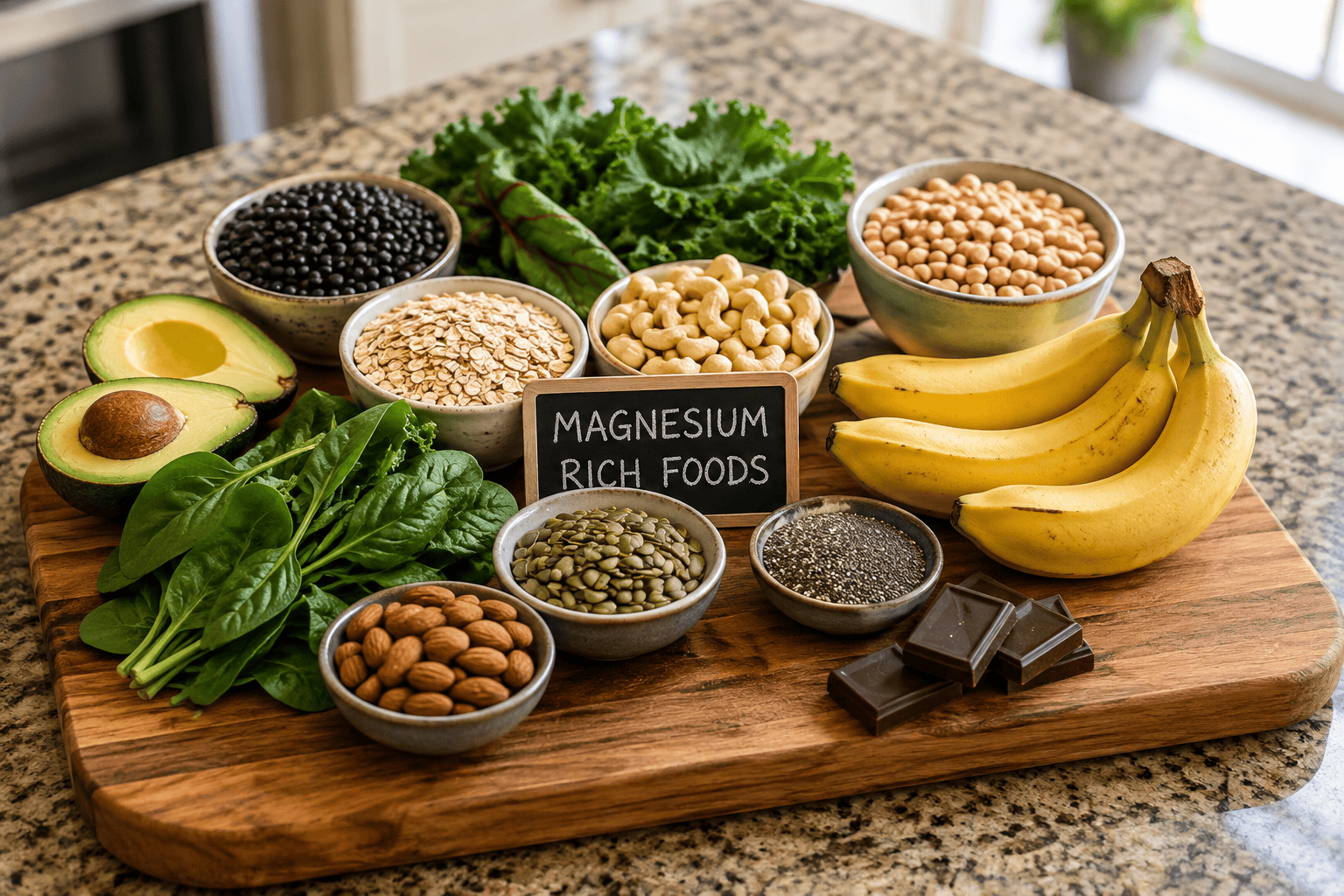
Magnesium is one of the hardest-working minerals in your body — involved in more than 300 different processes, from muscle and nerve function to sleep, blood sugar, and heart rhythm. A large share of people simply do not get enough of it.
Here is the part that trips people up: not all magnesium is the same. Walk into any store and you will find a wall of options — glycinate, citrate, malate, threonate, taurate, oxide — with no explanation of the difference. This issue clears that up. It also kicks off a new August series where I break down the supplements patients ask me about most.
Signs Your Magnesium May Be Low
- Muscle cramps or twitching
- Trouble falling or staying asleep
- Fatigue, or feeling "wired but tired"
- Headaches or migraines
- Constipation
One catch: a standard blood test rarely catches it. Only about 1% of your body's magnesium sits in your bloodstream — the rest is in bone, muscle, and tissue — so your levels can be functionally low even when lab work looks fine.
1. Magnesium Glycinate — Sleep & Stress
Magnesium paired with glycine, an amino acid that has its own calming effect. Gentle on the stomach and well absorbed, which makes it a good first choice for most people.
- Sleep quality and winding down at night
- Stress and general tension
- Nighttime muscle cramps
Best taken in the evening.
2. Magnesium Citrate — Digestion & General Use
Magnesium bound to citric acid. Widely available, affordable, and well studied, with a mild effect on digestion that helps with regularity.
- Occasional constipation and bowel regularity
- Everyday, all-purpose magnesium support
If you tend toward loose stools, start low or use glycinate instead.
3. Magnesium Malate — Energy & Muscle Aches
Magnesium with malic acid, a compound your cells use in energy production. A good fit if you feel tired despite decent sleep, or deal with widespread muscle achiness.
- Low energy and daytime fatigue
- Muscle soreness and recovery
Best taken in the morning or early afternoon, since it can be mildly energizing.

4. Magnesium Threonate — Brain & Focus
A newer form developed to cross into the brain more effectively than most others, which is why it is used for cognitive support. It tends to be the priciest option.
- Memory, focus, and mental clarity
- Long-term brain health
Worth considering if brain function is your main goal; for sleep or muscles, glycinate or malate is more practical.
5. Magnesium Taurate — Heart & Blood Pressure
Magnesium combined with taurine, an amino acid tied to cardiovascular function. Together they are one of the more heart-focused forms.
- Healthy blood pressure
- Heart rhythm support
A more specialized choice — best discussed with your provider if heart health is a focus, and never a replacement for prescribed care.
6. Magnesium Oxide — Heartburn & Occasional Constipation
The form found in most drugstore supplements and antacids. It looks strong on the label but is one of the least absorbed, so it is better as a short-term tool than a daily foundation.
- Heartburn and acid reflux
- Short-term relief of constipation
To actually rebuild your magnesium stores, a better-absorbed form like glycinate or citrate serves you more.
A Quick Way to Choose
- Sleep & stress → Glycinate
- Digestion & general use → Citrate
- Energy & muscle aches → Malate
- Brain & focus → Threonate
- Heart & blood pressure → Taurate
- Heartburn / occasional constipation → Oxide
Plenty of people use two — malate in the morning for energy, glycinate at night for sleep. Start with one goal, start low, and give it time.
Not sure which form fits your situation? That is exactly the kind of thing I am glad to walk through at a visit — nutrition is part of the whole-body picture I look at. You can also browse the professional-grade options in our online supplement store. Call us or book online below.
This is general education, not medical advice. Talk with your healthcare provider before starting any new supplement, especially if you take medication or manage a health condition.
Next Week
Week 2 is all about Vitamin D. Is it actually good for you? What counts as "too much"? And why taking Vitamin D on its own can work against you — plus the two other nutrients it needs to do its job right.
Ryan Chiropractic Wellness
Improving Function. Restoring Balance. Supporting Long-Term Health.
📍 Georgetown & Taunton, Massachusetts
📞 (978) 352-4200