

Parents & Teachers: Posture, Desk Setup, and Daily Self-Care
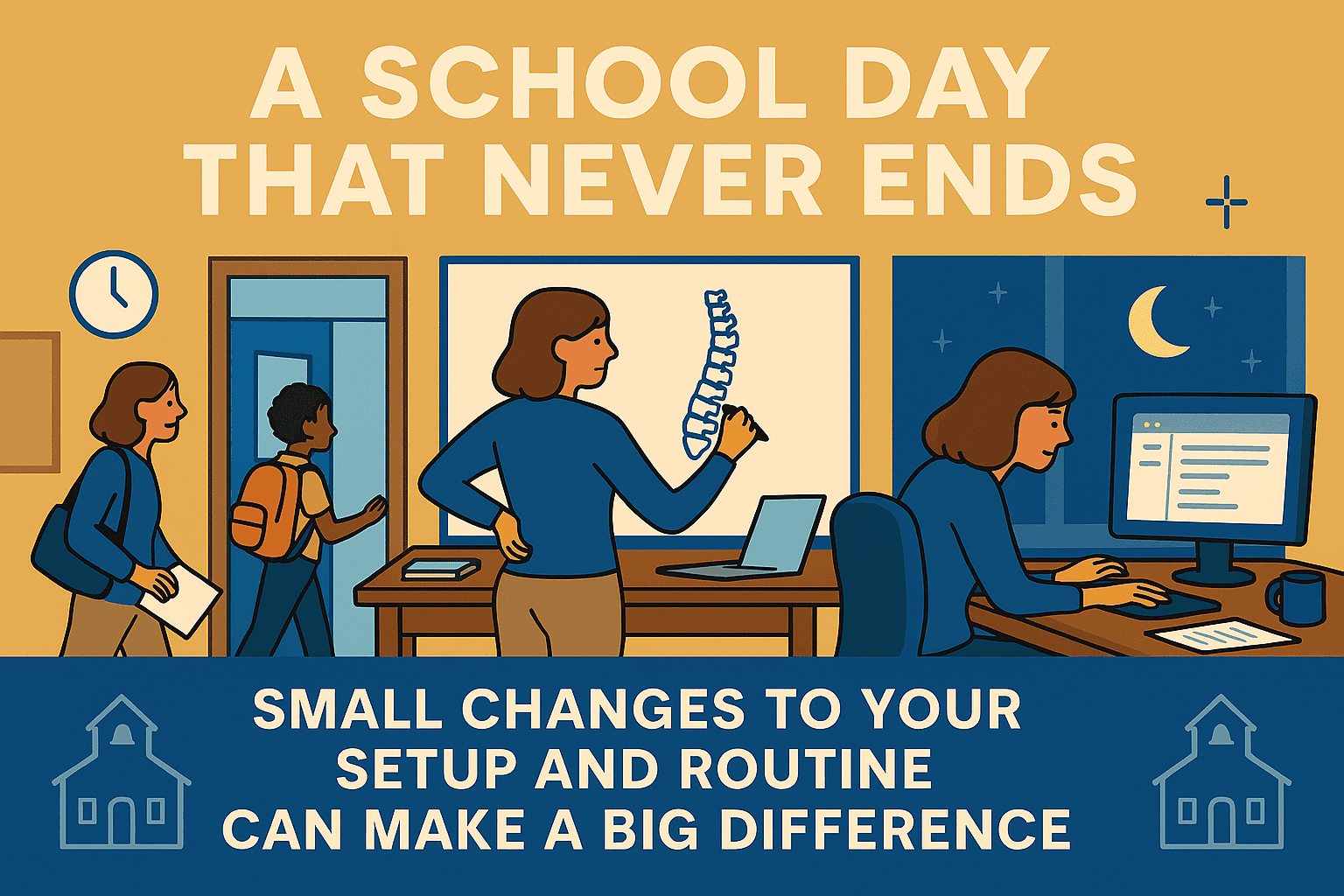
 A school day that never ends
Drop-offs and pickups. Standing at the whiteboard. Hours at the keyboard. Late-night grading and early-morning emails. If your neck, shoulders, or low back feel tight by day’s end, small changes to your setup and routine can make a big difference.
 Desk setup & posture fixes (quick wins)
 Desk setup & posture fixes (quick wins)
- Chair & feet: Feet flat on the floor; hips and knees near 90–100°. Add a small lumbar support or folded towel to maintain the natural curve.
- Screen height: Top of the monitor at or slightly below eye level; about an arm’s length away to reduce neck flexion and eye strain.
- Keyboard & mouse: Elbows near 90°; wrists neutral. Keep the mouse close; consider a keyboard tray if shoulders elevate.
- Microbreaks: 30–60 seconds every 30 minutes. Stand, roll shoulders, look far away, or walk a quick lap to reset posture.
- Phone & grading posture: Avoid cradling the phone; use speaker or headset. Prop papers on a document holder to limit head-down posture.
- Standing teaching days: Alternate shoes, use supportive insoles, and change stance often. If available, use a small footrest to shift weight.
- Bag load: Keep teacher totes/backpacks light; aim near 10% of body weight. Split loads or use a rolling option for heavy days.
Daily self-care checklist
 Daily self-care checklist
- 1 minute: shoulder rolls + chin tucks every hour
- 5 minutes: brisk walk or stair laps at lunch
- 2 stretches: chest doorway stretch + hip flexor stretch
- Hydration: keep water visible on the desk
- Evening: 30 minutes of screen-down time before bed
- Weekly: book or confirm your adjustment
Teacher Appreciation Offer
 Teacher Appreciation Offer
25% off initial exams for teachers. Already a patient? Enjoy 10% off one visit.
Valid during the first 3 weeks of September. Please mention this email at booking.
How chiropractic helps busy adults
 How chiropractic helps busy adults
- Improves mobility in the neck, mid-back, and low back for easier days at the desk and in the classroom
- Reduces muscle tension from prolonged sitting or standing
- Supports better sleep and recovery so you have more energy
A note from Dr. Ryan
 A note from Dr. Ryan
Thank you for all you do for our students and families. We’re here to help you feel your best so you can keep making a difference every day.
Looking ahead: Chiropractic History Month
Next month we explore milestones in chiropractic, starting with the first recorded adjustment on September 18, 1895. Watch your inbox for stories, insights, and practical takeaways.
 Facebook
 Instagram
CDC NIOSH – Ergonomics & computer workstation tips (accessed 2025):
cdc.gov/niosh.
WHO – Guidelines on physical activity and sedentary behaviour (2020):
who.int.
APTA/ChoosePT – Office ergonomics for desk workers (2022):
choosept.com.